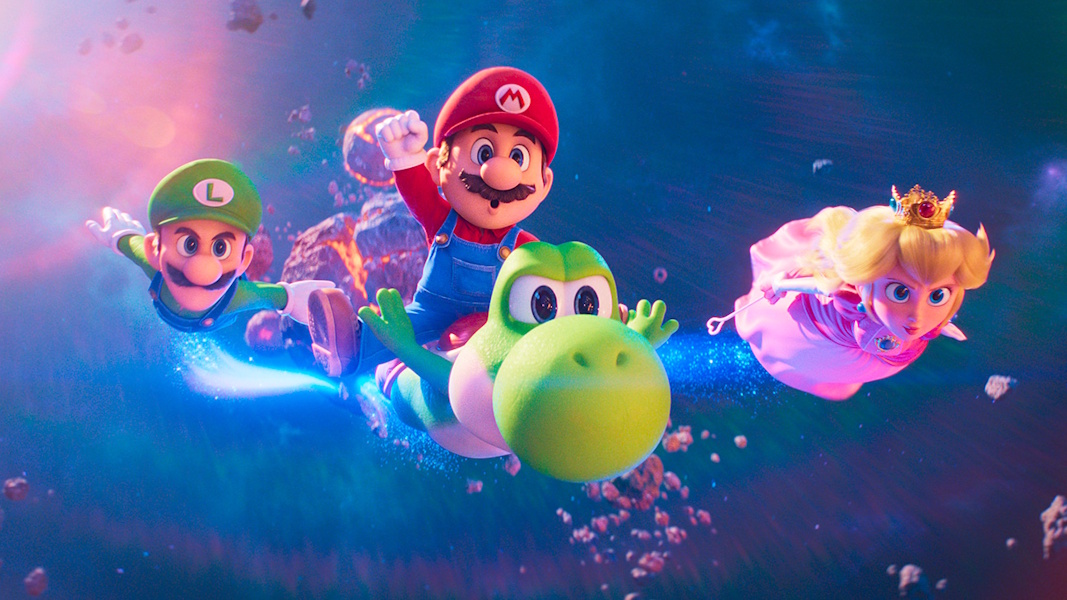
The success of The Super Mario Galaxy Movie is rapidly becoming one of the defining gaming stories of the year, reinforcing how powerful video game franchises have become in the wider entertainment landscape. Released in early April 2026, the animated sequel builds directly on the extraordinary momentum of The Super Mario Bros. Movie, which grossed over $1.3 billion globally and reshaped expectations for game-to-film adaptations. Early signs suggest the follow-up is continuing that trajectory, with strong box office projections and significant audience interest, even as critics remain divided on its execution.
The film, produced by Nintendo and Illumination, takes the Mario universe into space, drawing heavily from the Super Mario Galaxy games. Returning directors Aaron Horvath and Michael Jelenic, alongside writer Matthew Fogel, have expanded the scale of the story, introducing major characters such as Rosalina and Bowser Jr., while retaining the core cast from the original film. Shigeru Miyamoto once again played a key role in production, continuing Nintendo’s hands-on approach that has become central to the films’ identity and success.
From a commercial perspective, early projections indicate that the film could surpass the already massive opening of its predecessor. Industry estimates have pointed towards a domestic five-day opening exceeding $160 million, with some forecasts suggesting a global debut that could rival the biggest releases of the year. While final figures are still emerging, the scale of these projections alone highlights the continued strength of Mario as a global brand, particularly in a theatrical market that has struggled to consistently deliver blockbuster numbers in recent years.
Critically, however, the reception paints a more complex picture. Early reviews suggest that while the film delivers on spectacle and visual creativity, it leans heavily on nostalgia and fan service, sometimes at the expense of deeper storytelling. Critics have noted that the expanded scope, while ambitious, results in a narrative that can feel overcrowded or lacking emotional depth. Yet this divide mirrors the response to the 2023 film, where audience enjoyment ultimately outweighed critical reservations, suggesting that the franchise’s core appeal lies firmly with its fanbase rather than traditional film critique.
What is particularly significant is how the film continues to function as more than just a standalone cinematic release. Its impact is already being felt across the gaming space, with renewed attention on titles such as Super Mario Galaxy and broader engagement with Nintendo’s catalogue. This kind of cross-media synergy has become a cornerstone of Nintendo’s strategy, using film not only as entertainment but as a powerful marketing engine that feeds directly back into its gaming ecosystem.
There is also a clear indication that Nintendo is thinking beyond a single sequel. The scale of the Galaxy film, combined with its numerous character introductions and broader universe-building, points towards a long-term cinematic roadmap. Reports of expanded character involvement and wider Nintendo cameos suggest that the company may be laying the groundwork for a more interconnected film universe, potentially echoing the approach seen in superhero cinema. Whether that leads to spin-offs or crossover projects remains to be seen, but the direction of travel is becoming increasingly clear.
Ultimately, the early success of The Super Mario Galaxy Movie reinforces a major shift in the entertainment industry. Video game adaptations are no longer treated as risky experiments but as reliable blockbuster properties capable of driving global audiences. For Nintendo, it represents another step in transforming its flagship characters into multimedia powerhouses. For the wider industry, it confirms that when handled with authenticity and scale, gaming franchises are now among the most valuable storytelling assets in modern entertainment.