

Tomodachi Life: Living the Dream marks the long-awaited return of Nintendo’s quirky life simulation series, bringing its distinctive blend of humour, unpredictability, and social experimentation to a modern audience. Developed by Nintendo EPD with support from multiple internal and partner studios, and published by Nintendo, the game was released on 16 April 2026 for Nintendo Switch, with full compatibility on Nintendo Switch 2 through backwards compatibility. As a follow-up to the original Tomodachi Life on Nintendo 3DS, this entry builds on the core idea of managing a community of Mii characters, while significantly expanding both the scale and depth of interactions.
At its core, the game once again places players in control of a virtual island populated by Miis, the customisable avatars that have become synonymous with Nintendo platforms. Players act as an overseer rather than a direct participant, observing and influencing the daily lives of these characters as they form friendships, fall in love, argue, and pursue their own routines. The appeal lies in its unpredictability, with characters often behaving in unexpected or humorous ways that generate memorable moments without direct player scripting. This sandbox-like approach ensures that no two playthroughs feel exactly the same.
One of the most notable advancements in Living the Dream is the expanded customisation system. Players have far greater control over the appearance and personalities of their Miis, with new options for facial features, clothing, and expressions. The game also introduces more nuanced identity and relationship settings, allowing players to define pronouns and romantic preferences. This marks a significant evolution for the series, reflecting broader changes in how simulation games approach representation and player choice. These additions help create a more inclusive and flexible environment, giving players the tools to shape their island community in ways that better reflect a wider range of experiences.
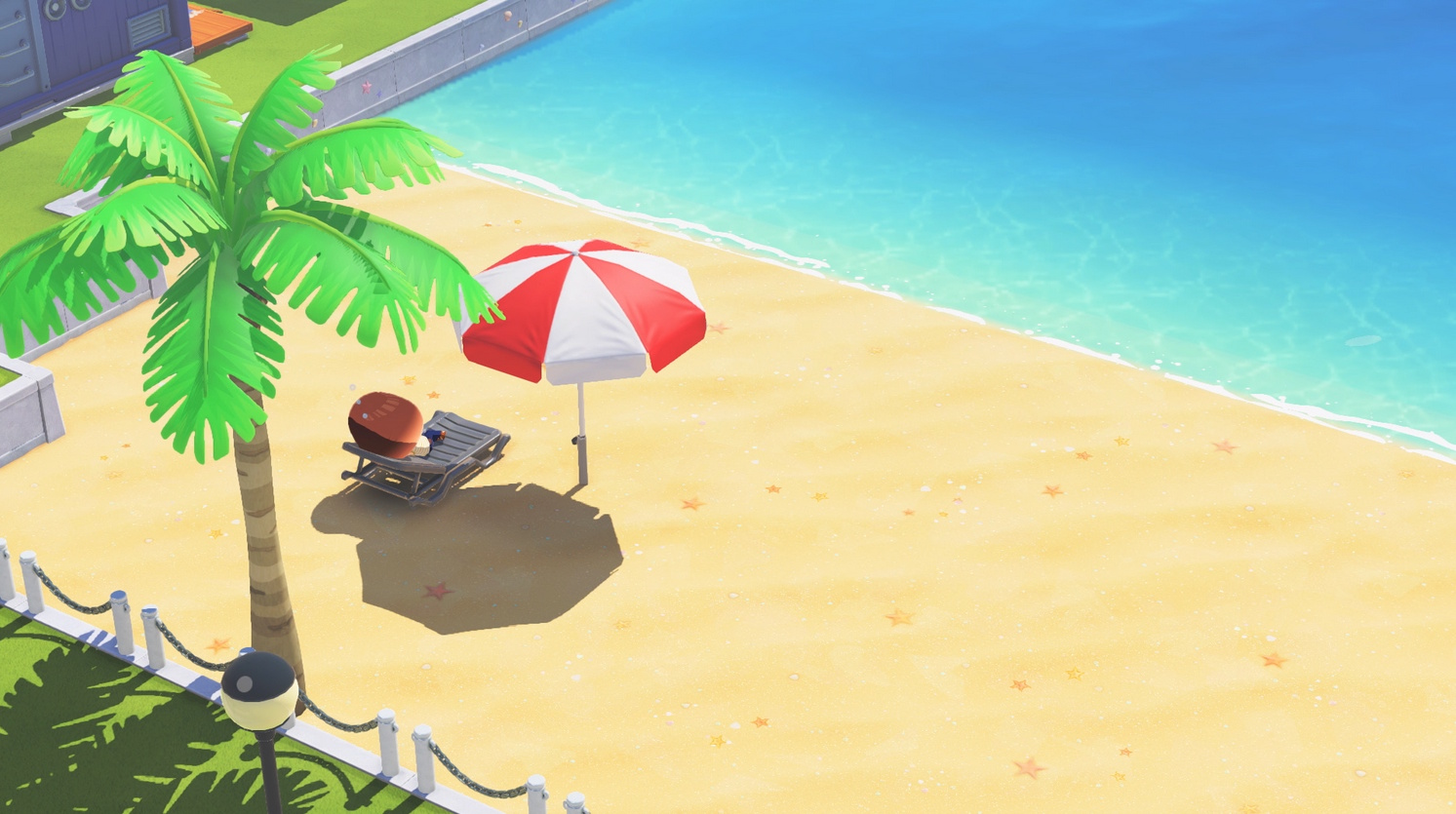
The island itself is no longer a static backdrop but a dynamic space that can be customised and developed over time. Players can influence the layout, unlock new locations, and introduce facilities that expand what their Miis can do. Shops, recreational areas, and social hubs all play a role in shaping the daily lives of residents, providing opportunities for new interactions and events. This added layer of control gives the game a stronger sense of progression compared to earlier entries, as the island evolves alongside its inhabitants.
Gameplay remains largely observational, but it is far from passive. Players are frequently called upon to resolve disputes, fulfil requests, and guide relationships. These interactions might involve choosing dialogue responses, selecting gifts, or deciding how to handle conflicts between characters. While outcomes are not always predictable, these decisions subtly influence the direction of each Mii’s life, adding a layer of strategy beneath the light-hearted surface. The balance between control and chaos is central to the experience, ensuring that players feel involved without removing the spontaneity that defines the series.
Visually, the game retains the clean, colourful aesthetic associated with Nintendo titles, while benefiting from the increased power of the Switch hardware. Character animations are more expressive, environments are more detailed, and the overall presentation feels more polished than its predecessor. The user interface has also been refined, making it easier to navigate the growing number of options and systems. Despite these improvements, the game maintains the charm and simplicity that made the original so accessible.
Audio plays a key role in reinforcing the game’s personality. The soundtrack features a mix of playful and relaxed compositions that adapt to different situations on the island, while the signature Mii voice system returns with its distinctive synthetic tones. These elements combine to create a tone that is both light-hearted and slightly surreal, perfectly matching the unpredictable nature of the gameplay. It is a style that may not appeal to everyone, but for fans of the series, it remains an essential part of its identity.
On Nintendo Switch, with compatibility extending to Nintendo Switch 2, Tomodachi Life: Living the Dream successfully modernises a cult favourite while staying true to its original concept. The expanded customisation, improved systems, and more inclusive design help it feel like a meaningful evolution rather than a simple sequel. By embracing both player creativity and the inherent unpredictability of its simulation systems, it delivers an experience that is as entertaining as it is unusual, offering countless emergent stories shaped entirely by the interactions of its virtual residents.
BUY TOMODACHI LIFE: LIVING THE DREAM

Tomodachi Life Living the Dream Download
Tomodachi Life Living the Dream is available to purchase and download from a range of vendors…..
Tomodachi Life Living the Dream Key
There are a wide range of resellers that may offer keys for Tomodachi Life Living the Dream. This is often….
Tomodachi Life Living the Dream Free
Tomodachi Life Living the Dream is available to purchase from the link(s) shown further up this page. This is the official way to…..
Tomodachi Life Living the Dream Updates
The developers of Tomodachi Life Living the Dream offer regular updates to the game. For more…