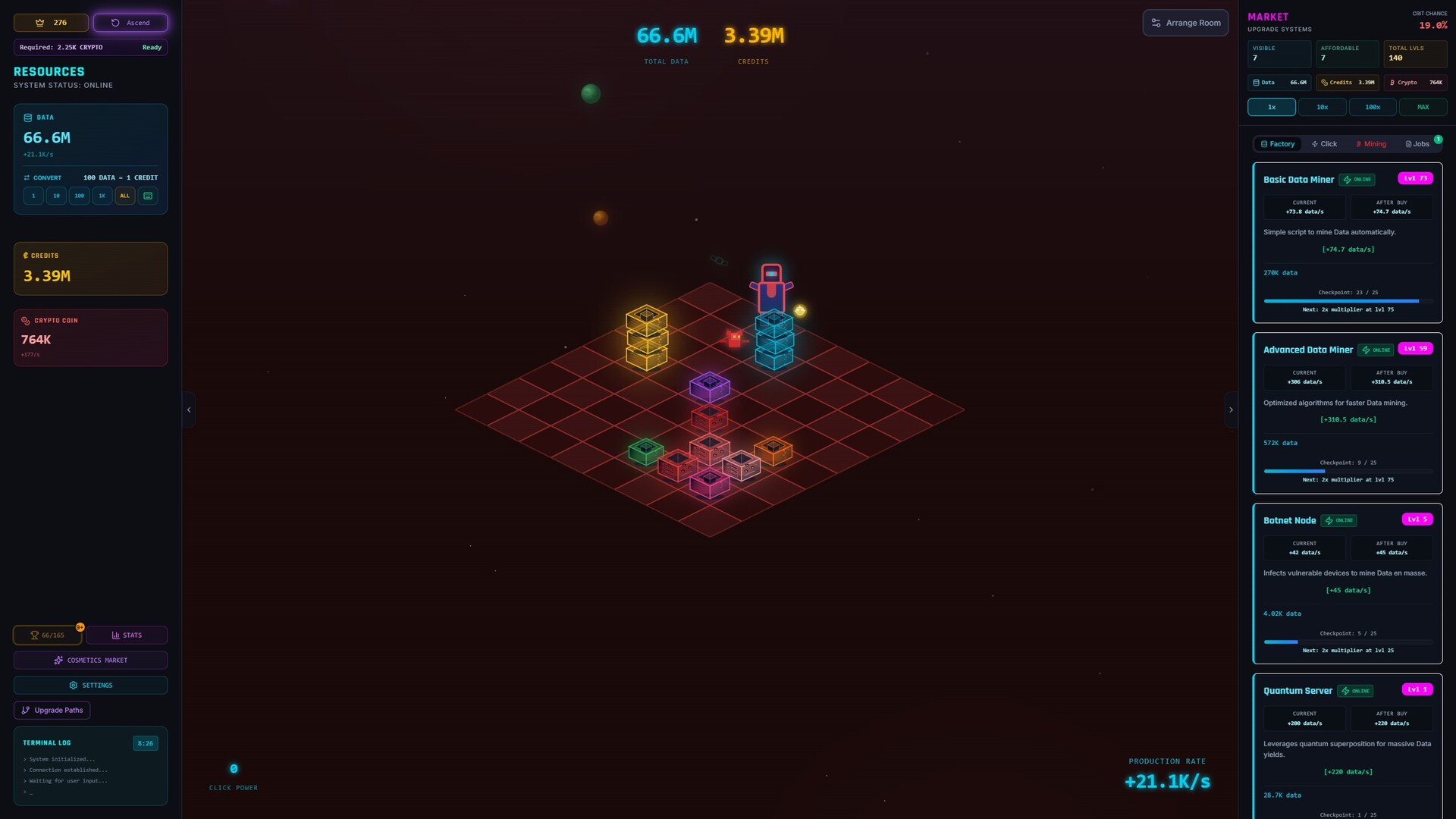


DataFall is a cyberpunk-themed idle and automation game developed and published by kNu Game Studio, designed to sit comfortably within the increasingly popular incremental and system-building genre. Released on 17 April 2026, the game is currently available on PC via Windows, positioning itself as a focused, single-platform experience that leans into depth rather than broad accessibility. From the outset, DataFall makes it clear that it is built around long-term progression, where players are encouraged to construct, refine and continually optimise complex systems that grow more intricate over time.
At its core, DataFall is a clicker-idle hybrid that emphasises automation and scaling mechanics. Players begin with relatively simple systems that generate resources automatically, but the game quickly evolves into something far more layered. Each system feeds into another, creating a web of interconnected mechanics where efficiency becomes the driving force behind progress. Rather than relying purely on manual input, the design encourages players to think in terms of optimisation loops, ensuring that even when the game is left running, progress continues steadily in the background. This passive progression is balanced with moments that require active engagement, preventing the experience from becoming entirely hands-off.
The cyberpunk setting plays a significant role in shaping the game’s identity. Visually, DataFall leans into a high-contrast, neon-infused aesthetic that reflects the constant flow of data and information across the screen. Numbers, effects and animations build in intensity as systems scale upward, giving a sense of controlled overload that mirrors the game’s mechanical complexity. This visual direction aligns well with the broader themes of technological growth and system optimisation, creating a cohesive atmosphere that supports the gameplay loop rather than distracting from it.
One of the defining features of DataFall is its approach to progression through “ascension” mechanics. As players push their systems to their limits, they are eventually encouraged to reset progress in exchange for permanent upgrades and new pathways. This loop ensures that each run contributes to long-term growth rather than feeling like a restart. It also introduces strategic decision-making, as players must determine the right moment to reset in order to maximise efficiency. Over time, these resets unlock deeper layers of gameplay, including advanced systems that significantly alter how progression unfolds.
Beyond the basic automation loop, DataFall introduces additional systems that expand its strategic depth. Features such as specialised upgrade paths, resource modifiers and late-game mechanics allow players to customise their approach in meaningful ways. Systems like advanced shops, experimental upgrades and evolving modifiers provide opportunities to tailor builds, ensuring that no two progression paths feel identical. This level of flexibility is particularly appealing to players who enjoy fine-tuning systems and experimenting with different optimisation strategies.
The game also incorporates boss encounters that interrupt the otherwise steady automation cycle. These moments require direct input and decision-making, forcing players to engage actively with the systems they have built. This design choice adds a layer of tension and variety, ensuring that progression is not purely linear. It also reinforces the idea that while automation is central to the experience, player intervention remains a key part of mastering the game.
As a lesser-known indie release, DataFall fits neatly into the niche of incremental cyberpunk management games, appealing to players who enjoy slower, systems-driven progression. Its combination of idle mechanics, resource management and strategic resets makes it particularly attractive to those who appreciate optimisation-focused gameplay loops. The presence of a demo, with progress carrying over into the full game, further lowers the barrier to entry and allows players to get a feel for its mechanics before committing fully.
In terms of overall positioning, DataFall stands as a strong example of how smaller-scale projects can deliver depth through clever system design rather than large-scale production values. Its focus on automation, layered progression and customisation ensures that it offers more than a simple clicker experience. For players searching for a data-driven idle game with a cyberpunk edge, it provides a compelling option that rewards patience, experimentation and careful planning over time.
BUY DATAFALL

DataFall Download
DataFall is available to purchase and download from a range of vendors…..
DataFall Key
There are a wide range of resellers that may offer keys for DataFall. This is often….
DataFall Free
DataFall is available to purchase from the link(s) shown further up this page. This is the official way to…..
DataFall Updates
The developers of DataFall offer regular updates to the game. For more…